
THE BEST ROOFING TRAILER FOR TEAR-OFF CLEANUP: WHY THE EQUIPTER 4000 BEATS THE TARP
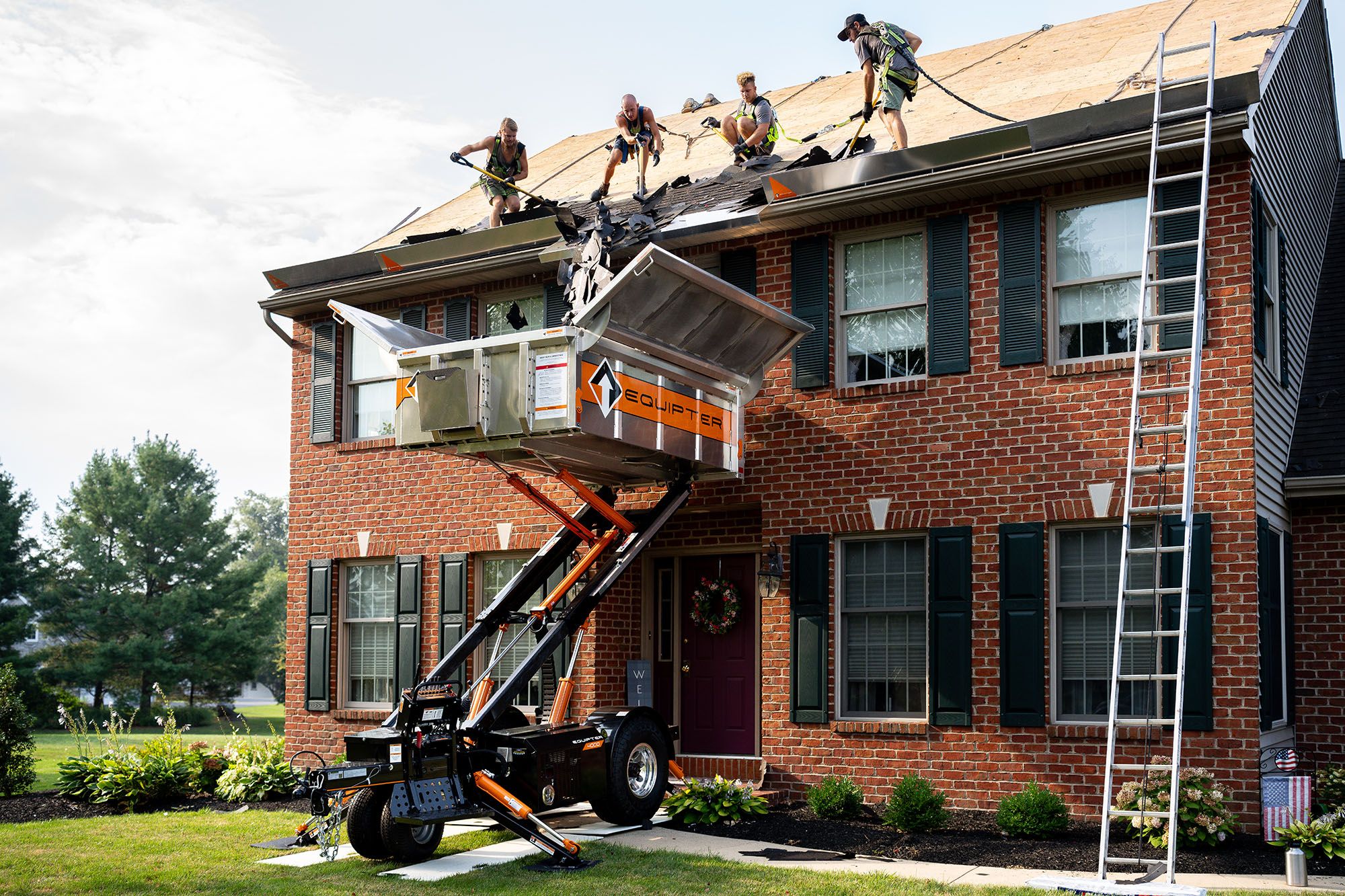
Ask any roofing crew what part of the job they'd happily hand off, and you'll hear the same answer: cleanup. The tear-off itself has a rhythm to it. The mess it leaves behind doesn't. Shingles in the flower beds, nails in the driveway, a tarp dragged back and forth across a lawn that the homeowner just paid to reseed — that's the part that eats hours, frays patience, and shows up in the online review.
The trouble is, debris cleanup has stayed stuck in the past while the rest of the trade modernized. Crews still rely on tarps, wheelbarrows, and a roll-off dumpster parked wherever it would fit. So when contractors go looking for the "best roofing trailer," what they're really looking for is a way to make the mess stop costing them money. Here's why that search keeps landing on the Equipter® 4000 — and what to weigh before you put one on your next job.
The hidden cost of old-school debris cleanup
Before we talk equipment, it's worth being honest about what the traditional approach actually costs. None of it shows up as a single line on an invoice, which is exactly why it's so easy to ignore.
Start with labor. When tear-off debris lands in the yard, someone has to pick it up — by hand, by rake, by tarp drag — and then move it to a dumpster that's often parked at the curb, far from the house. That's crew time spent walking instead of roofing.
Then there's the property. Shingles and felt smother grass. Nails find their way into lawns, mulch beds, and tires. A roll-off dumpster sitting on a driveway for three days can crack the concrete or stain it. Every one of those is a potential callback, a deduction from the final check, or a homeowner who tells the neighbors the wrong story about your company.
And there's the part that's hardest to measure but easiest to feel: how the job looks while it's happening. A clean site signals a professional crew. A yard buried in debris signals the opposite — no matter how good the actual roof turns out to be.
What actually makes a roofing trailer "the best"
"Best" depends on the job, but a roofing trailer earns the title by solving the cleanup problem at its source rather than just hauling away the aftermath. A few things separate a real tear-off solution from a glorified dumpster on wheels.
The first is catching debris before it hits the ground. A trailer that raises its container up to the roofline lets your crew drop shingles straight into the bin instead of into the landscaping. That single change is what eliminates most of the ground cleanup in the first place.
The second is maneuverability and reach. A unit you can drive into a backyard, position under the eave, and operate without a second machine is worth far more than one that has to stay parked at the curb. Tight gates, soft lawns, and sloped driveways are where most equipment gives up.
The third is lift capacity and dump height. You want enough capacity to hold a meaningful share of a tear-off, and enough lift to dump directly into a roll-off, dump truck, or trailer when the container is full — no double-handling.
And the fourth, quietly, is property protection. The best roofing trailer leaves the lawn, the driveway, and the homeowner's patience intact. That's the difference between a job that generates referrals and one that generates a punch list.
How the Equipter 4000 solves it
The Equipter 4000 — "The Drivable Debris Trailer" — was built around exactly that list. It's the flagship of the Equipter line and the reason New Roof No Mess® became a tagline crews actually repeat.
Here's what it brings to the job site:
It raises debris to the roofline. The 4000 lifts its container up to 12'0" lift height, so your crew places tear-off straight into the bin instead of letting it rain into the yard. Most nails and shingles never reach the landscaping at all — which is where the "no mess" promise comes from.
It drives itself into position. The 4000 is self-propelled equipment, so one person can move it at walking speed into a backyard, around a tight gate, or up to the eave — no skid steer, no second operator, no waiting. When the job's done, you tow it to the next one.
It holds a real tear-off. With a job-site capacity of 4,000 lbs — roughly 12 to 15 square of asphalt shingles] — the 4000 carries a meaningful chunk of a roof before it needs to dump. 4.1 cu yd container volume.
It dumps with one touch. Powerful hydraulics let the 4000 dump from any position — even at full height — straight into a roll-off container, dump truck, or trailer. The hydraulic tailgate empties scraps and dirt cleanly, so there's no shoveling out the corners.
It protects the property. Because debris goes up and into the bin instead of down into the yard, the lawn and beds stay clean. And because the unit moves on its own, there's no roll-off dumpster parked on the driveway for three days.
Translate that into the job site and the math is simple: less time spent on cleanup, fewer nails left behind, a driveway that's still intact at the final walkthrough, and a homeowner who watched your crew work clean from start to finish. That last part has a way of turning into the next job — the neighbors notice a tidy site.
Equipter 4000 vs. the usual alternatives
Most crews comparing roofing trailers are really weighing the 4000 against three familiar options. Here's the honest rundown.
Versus a roll-off dumpster: A roll-off is a container, not a cleanup system. It catches nothing — every shingle still has to be picked up off the ground and carried to the bin by hand. It also sits in one spot, usually the driveway, for the duration. The 4000 comes to the roof and catches the debris as it falls.
Versus a standard dump trailer: A towable dump trailer hauls debris away, but it can't raise a container to the roofline and can't drive itself into a backyard. You're still cleaning up the ground first. The 4000 does the catching and the hauling.
Versus tarps and manual cleanup: This is the true default, and it's the most expensive one once you count the labor hours and the landscaping callbacks. Tarps protect some of the lawn some of the time. The 4000 removes the need to drag them at all.
None of these alternatives are useless — a roll-off still has its place for whole-house demos, and a dump trailer is fine for hauling. But for tear-off cleanup specifically, the unit that catches debris at the roofline and drives itself around the property is in a different category.
Buy, or rent first?
You don't have to commit to ownership to find out whether a drivable debris trailer changes how your crew works. Renting an Equipter for a job or two is the lowest-risk way to see the difference on your own site, with your own crew, on a roof you already know.
A lot of contractors rent first, watch the cleanup time on a real tear-off, and make the buying decision from there. If the numbers work — and for high-volume crews they usually do — financing the purchase becomes the next conversation.
Frequently asked questions
What is the best trailer for roofing debris and tear-off cleanup? For tear-off specifically, the most effective option is a drivable debris trailer that raises its container to the roofline so crews drop shingles straight into the bin. The Equipter 4000 is built for exactly this and is widely used across residential and commercial roofing for that reason.
How much roofing debris does the Equipter 4000 hold? The 4000 has a job-site capacity of 4,000 lbs — roughly 12 to 15 square of asphalt shingles, and lifts to dump directly into a larger container when full.
Can one person operate the Equipter 4000? Yes. The 4000 is self-propelled and designed to be moved and operated by a single crew member, so it doesn't tie up your team or require a second machine.
Does a roofing trailer really protect the lawn and driveway? That's the main advantage over a roll-off dumpster. Because debris goes up into the raised container instead of falling into the yard, most nails and shingles never reach the landscaping, and there's no heavy dumpster parked on the driveway.
Should I rent or buy a roofing trailer? If you're not sure it fits your workflow, rent one for a job first. It's the easiest way to measure the cleanup savings before committing to a purchase.
See it on your own job site
The fastest way to know whether the 4000 is the best roofing trailer for your crew is to put one to work. Want to try it before you buy? Rent an Equipter for your next tear-off and watch the cleanup take care of itself.
Learn more about the Equipter 4000 and the accessories that make it even faster — like the roof chute and gutter protector.
Share this article